Empty House, Unreliable Numbers: What Nevada Homeowners Must Know About Testing During Vacations and School Breaks

Photo by Photo by Jason Mayer on Unsplash on Unsplash
Every year, thousands of Nevada homeowners pack their bags, lock the front door, and head out for weeks at a time—spring break road trips to the coast, extended holiday visits to family in other states, or the slow migration that comes with Nevada's scorching summer months. What most of those homeowners never consider is what's happening to the air inside their homes while they're gone. Specifically, what radon gas is doing—and what any test results collected during that window are actually measuring.
The short answer: an empty home is not a normal home. And a radon test conducted in an abnormal environment may produce numbers that are either falsely elevated or misleadingly low, neither of which serves the homeowner's actual goal of understanding their risk.
Why Radon Behaves Differently in an Unoccupied Home
Radon is a naturally occurring radioactive gas that seeps into structures through foundation cracks, gaps around utility penetrations, and porous building materials. Its concentration indoors is not static—it fluctuates based on a complex web of variables, including soil pressure, atmospheric conditions, and, critically, human activity inside the home.
When a household is occupied, residents constantly alter the indoor environment. Opening windows, running exhaust fans, operating HVAC systems, and simply moving through rooms all create airflow that disrupts radon's tendency to accumulate. Cooking, showering, and doing laundry introduce humidity and pressure changes that further influence how the gas distributes itself across different levels of the home.
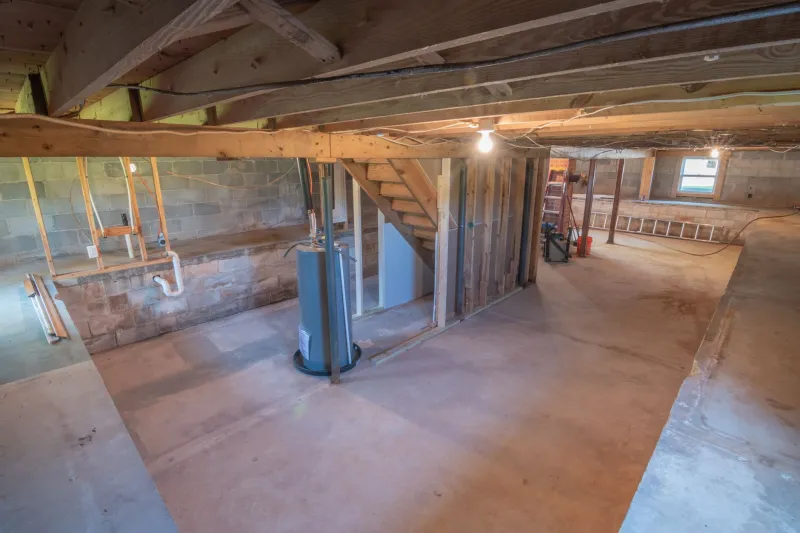
When that same home sits vacant for two, three, or four weeks, none of those dynamics are at play. Windows stay shut. HVAC systems may cycle on a reduced schedule or switch to a programmed setback mode. No one is opening interior doors or running ventilation fans. The result is a sealed, stagnant environment that allows radon to accumulate in ways it typically wouldn't during normal daily life.
In some cases, this produces readings that are higher than what residents would actually experience. In others—particularly when a programmed thermostat keeps the HVAC running more aggressively than usual to manage summer heat—the mechanical ventilation may dilute radon concentrations below what they would be when the home is occupied and the system is under greater demand.
The Closed-House Condition Requirement—and Why Absence Complicates It
Professional radon testing protocols in the United States typically call for what is known as closed-house conditions. This means that all windows and exterior doors should remain closed for at least twelve hours before the test begins and throughout the testing period, with the exception of normal entry and exit. The intent is to standardize the indoor environment so that results reflect a reasonable approximation of typical occupant exposure.
The challenge arises when homeowners attempt to satisfy this requirement during an extended absence. On the surface, a locked, vacant home seems to fulfill closed-house conditions perfectly—nothing is being opened. But the protocol was designed with normal occupancy in mind. The absence of human activity, appliance use, and routine ventilation behavior means the closed-house environment in a vacant home is qualitatively different from what the protocol intends to capture.
A radon test is ultimately meant to answer one question: what level of gas are the people living in this home being exposed to? If no one is living in it during the test, the answer the test provides may not be relevant to that question.
Common Scenarios Where This Problem Surfaces
This issue tends to emerge in predictable patterns for Nevada homeowners:
Holiday travel: Families leaving for Thanksgiving or Christmas for two to three weeks often place a short-term test kit before departing, thinking the quiet house is an ideal testing environment. The results they return to may not reflect typical exposure at all.
Summer relocation: Some Nevada homeowners, particularly in the Las Vegas metro area, spend significant portions of summer at cooler secondary residences or with family elsewhere. A home sitting in desert heat with minimal HVAC cycling is not behaving normally.
School-year breaks: Households with school-age children sometimes choose spring break or winter recess as convenient testing windows, reasoning that the family's absence reduces disruption to the test. The disruption, however, has simply shifted from the test to the accuracy of its results.
Snowbird patterns: Nevada attracts retirees who split time between the state and warmer winter destinations. A home left vacant from November through March presents a particularly complex testing environment given seasonal radon fluctuations and extended mechanical dormancy.
What Homeowners Should Do Instead
The most reliable radon test is one conducted while the home is occupied under normal, everyday conditions. If you know that an extended absence is unavoidable, there are several steps worth taking.
First, consider postponing the test until the household has returned and resumed its regular routines. Allow at least two to three days of normal occupancy before beginning any short-term test, giving the home's air dynamics time to restabilize.
Second, if a test was already conducted during a period of vacancy, treat those results as preliminary rather than definitive. Share the circumstances with a certified radon measurement professional and ask whether a follow-up test under occupied conditions is warranted before making any mitigation decisions.
Third, consider long-term testing as an alternative. A long-term test, which runs for ninety days or more, captures radon levels across a broad range of conditions—including occupied periods, seasonal shifts, and varying weather patterns. Over that extended window, the influence of any single vacancy period is naturally diluted, producing a more representative average.
Finally, if you use a programmable or smart thermostat, document its settings during any vacancy. A certified professional reviewing your results will want to understand what the HVAC system was doing during the test period, as mechanical ventilation patterns are a significant variable in interpreting readings accurately.
Accuracy Is the Whole Point
Radon testing is only valuable insofar as it produces actionable, accurate information. A number that reflects the behavior of an empty house—rather than the home as it functions with a family inside it—may lead to decisions that are either unnecessarily costly or dangerously complacent.
Nevada homeowners face genuine radon risk driven by the state's geology, soil composition, and building practices. That risk deserves to be measured honestly, under conditions that reflect real life. Before you set a test kit on the basement shelf and head to the airport, take a moment to consider whether the results waiting for you when you return will actually tell you what you need to know.
When in doubt, consult a certified radon professional. The goal isn't just to complete a test—it's to understand your home.