Mined Into the Earth, Released Into Your Home: How Nevada's Uranium Legacy Shapes Today's Radon Risk
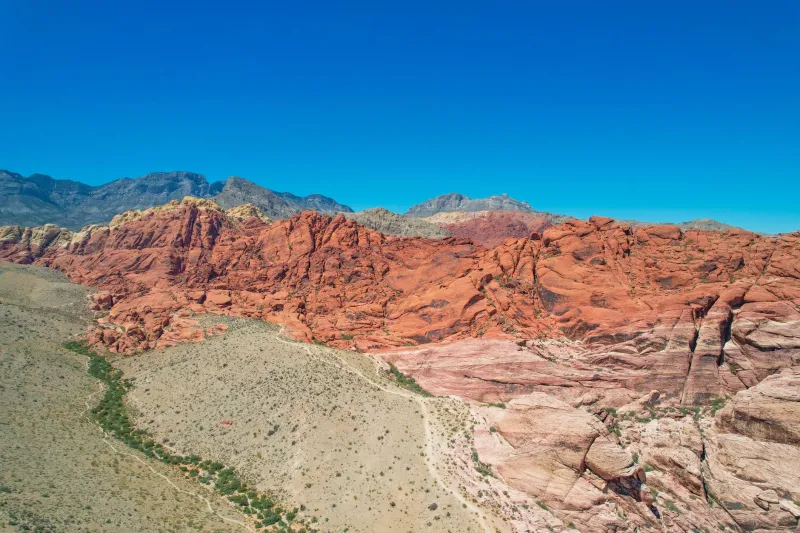
Nevada is widely associated with desert landscapes, casino corridors, and dramatic mountain ranges. What rarely enters the public conversation is the state's substantial role in the mid-twentieth century uranium boom — a chapter of industrial history whose environmental consequences have not fully closed. For homeowners in certain Nevada counties, the radioactive residue of that era continues to influence the air inside their own walls, in the form of radon gas.
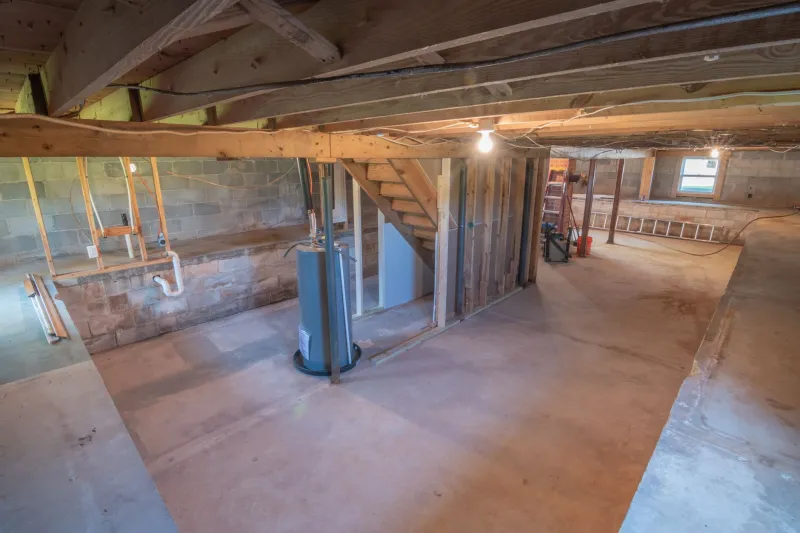
Radon is a naturally occurring, colorless, and odorless radioactive gas that forms as uranium decays through a predictable chain of elements. It seeps upward through soil and rock, enters structures through foundation cracks, utility penetrations, and permeable building materials, and accumulates indoors to concentrations that the U.S. Environmental Protection Agency has linked to lung cancer risk. What makes Nevada's situation distinct is not simply the presence of uranium-bearing geology — that is common across much of the American West — but the degree to which historical mining activity has disturbed, concentrated, and redistributed uranium-rich material across the landscape.
Nevada's Uranium Extraction History in Brief
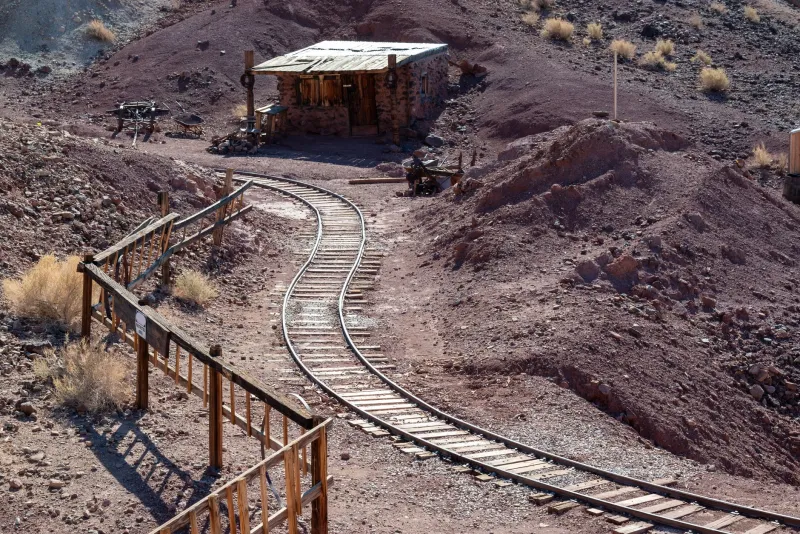
Uranium prospecting in Nevada intensified during the late 1940s and accelerated through the 1950s and 1960s, driven largely by federal demand during the Cold War arms race and the expansion of commercial nuclear power. Counties including Nye, Mineral, Elko, and White Pine saw varying degrees of exploration and extraction activity. While Nevada never ranked among the nation's top uranium-producing states — Wyoming, Colorado, and New Mexico held that distinction — the exploration footprint was extensive, and numerous small-scale operations, test shafts, and open-pit workings were established across the region.
Many of these sites were never subject to the comprehensive remediation standards that federal law would later require. The Uranium Mill Tailings Radiation Control Act of 1978 addressed the most egregious legacy sites, but smaller exploration operations and abandoned workings often fell outside its scope. The result is a patchwork of residual contamination that has, over decades, been partially redistributed by wind, water, and construction activity.
What Happens to Uranium Tailings Over Time
Uranium tailings — the crushed rock and processed material left behind after uranium extraction — contain elevated concentrations of radium-226, the immediate precursor to radon in the uranium decay chain. When these tailings are left exposed at the surface or improperly contained, radium continues its slow transformation into radon gas, which then migrates through the surrounding soil.
The critical issue for homeowners is that this migration does not stop at the boundaries of a former mining parcel. Radon is a gas, and it follows pressure gradients and soil permeability pathways that bear no relationship to property lines drawn on a plat map. Homes built on land adjacent to former exploration sites, or on terrain where wind-dispersed tailings material settled decades ago, may sit atop soil with elevated radium content that continuously generates radon — often without any visible surface indication of prior industrial use.
Furthermore, construction activity itself can disturb this equilibrium. Grading, excavation for foundations, and the installation of utility trenches can bring uranium-bearing material closer to the surface or disrupt the natural soil layering that otherwise slows radon's upward movement.
Why Certain Nevada Counties Still Show Elevated Readings
The EPA's radon zone mapping designates much of Nevada as Zone 1 or Zone 2, indicating predicted average indoor radon levels at or above the agency's action threshold of 4 picocuries per liter of air. But these zone designations are based on geological surveys and average measurements — they do not capture the localized spikes that can occur near former mining infrastructure.
Field data collected by Nevada's radon program and independent researchers has documented instances where homes in proximity to historical uranium workings record readings significantly above the county average. In some cases, structures located miles from a documented mine site still show elevated results, a consequence of the dispersal patterns described above. Remediation efforts at identified legacy sites have reduced — but not eliminated — the radioactive source material in the surrounding environment. Radon generation from residual radium in dispersed soil continues at a low but persistent rate.
Homeowners in Nye County, parts of Elko County, and the Mineral County corridor would be particularly well-advised to treat radon testing not as a routine checkbox but as a genuine priority. The geological context in these areas warrants a higher baseline level of vigilance than the zone maps alone might suggest.
The Gap Between Regulatory Remediation and Residential Reality
It is worth understanding what remediation of a uranium legacy site does and does not accomplish. When federal or state agencies clean up a former mining location, the primary objectives typically involve stabilizing or removing the most concentrated sources of radioactive material, capping tailings piles, and preventing further migration into groundwater. These are meaningful interventions that reduce overall environmental risk.
However, remediation does not reset the surrounding geology to a pre-mining baseline. Radium that has dispersed into adjacent soil over several decades remains in place. The half-life of radium-226 is approximately 1,600 years, meaning that the radioactive source material generating radon in affected soils will remain active well beyond any human planning horizon. For practical purposes, homeowners near former uranium operations should assume that elevated radon potential is a permanent feature of their property's geological context — not a temporary condition that remediation has resolved.
Practical Steps for Homeowners in Affected Regions
The connection between Nevada's mining legacy and present-day radon risk is not cause for alarm, but it is cause for informed action. Several steps are particularly relevant for homeowners in historically affected counties.
Test with long-term instruments. Short-term radon tests provide a snapshot; long-term alpha track detectors deployed for 90 days or more yield a more accurate picture of chronic exposure levels. Given the variable nature of radon migration in disturbed soils, a single short-term test may underrepresent actual risk.
Research your parcel's history. The Nevada Division of Minerals maintains records of historical mining claims and exploration activity. Searching these records for your address or the surrounding section of land can reveal whether prior uranium-related activity occurred nearby — information that informs how seriously to treat elevated test results.
Consult a certified mitigation professional. If testing reveals levels at or above 4 pCi/L, a sub-slab depressurization system installed by a qualified contractor is the most reliable corrective measure. In areas with known uranium-bearing soils, passive ventilation improvements alone may be insufficient to maintain safe levels over time.
Retest after any significant construction. Excavation, foundation work, or even deep landscaping can alter the radon entry dynamics of a home. Any structural project that disturbs the soil beneath or adjacent to your foundation warrants a fresh round of testing.
A Legacy That Demands Ongoing Attention
Nevada's uranium mining era may occupy only a few paragraphs in most state history textbooks, but its environmental footprint extends into the present in ways that are directly relevant to residential health. The radon that forms from residual radium in disturbed soils does not observe the passage of time or the closure of mine shafts. It continues its quiet migration upward, entering homes whose occupants may have no awareness of the industrial history beneath their feet.
For Nevada homeowners — particularly those in counties where uranium exploration was once active — understanding this connection is the first step toward meaningful protection. Testing remains the only way to know what is actually present in your home's air, and the geological context of your region is a compelling reason not to defer that step.