Dust in the Air, Danger in the Ground: How Nevada's Desert Storms Are Hiding Your Home's Radon Problem

When a haboob rolls across the Mojave or a late-summer windstorm kicks up a wall of particulate matter across the Reno basin, Nevada homeowners instinctively reach for air purifiers, seal window gaps, and check HVAC filters. The concern is understandable. Desert dust is a genuine respiratory irritant, and the visual evidence of its intrusion — gritty countertops, hazy skies, irritated sinuses — makes it easy to identify as the culprit behind any indoor air quality complaint. The problem is that this very visibility creates a dangerous blind spot. Radon gas, which is colorless, odorless, and entirely undetectable without instrumentation, does not announce itself the way a dust storm does. And in Nevada, where geological and climatic conditions conspire to elevate radon risk, the two threats are frequently conflated — with potentially fatal consequences.
Why Visible Threats Overshadow Invisible Ones
Human perception is naturally drawn to what can be seen, smelled, or felt. When Nevada residents notice their eyes watering or their throats tightening during a dust event, they attribute the discomfort to particulate matter — and they are often correct, at least partially. Fine desert dust, particularly PM2.5 and PM10 particles, does irritate the respiratory system and poses legitimate health risks with prolonged exposure. Air quality alerts issued by the Nevada Division of Environmental Protection frequently reference dust as a primary concern during high-wind events.
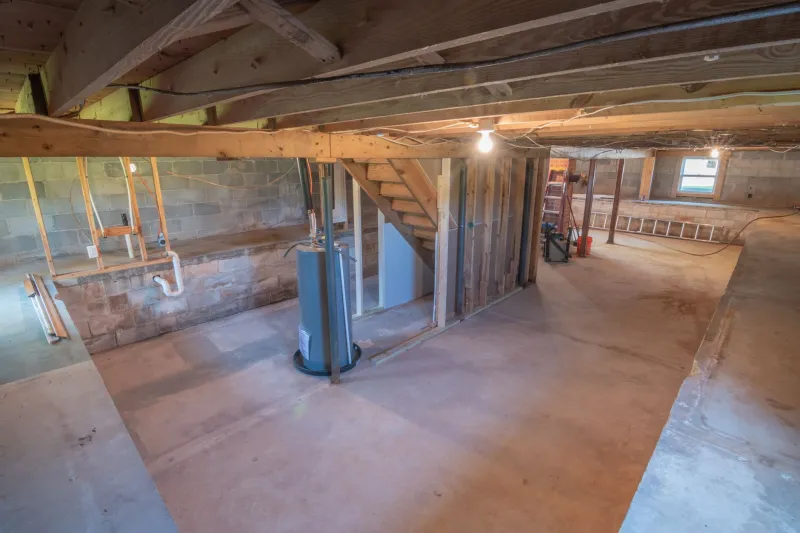
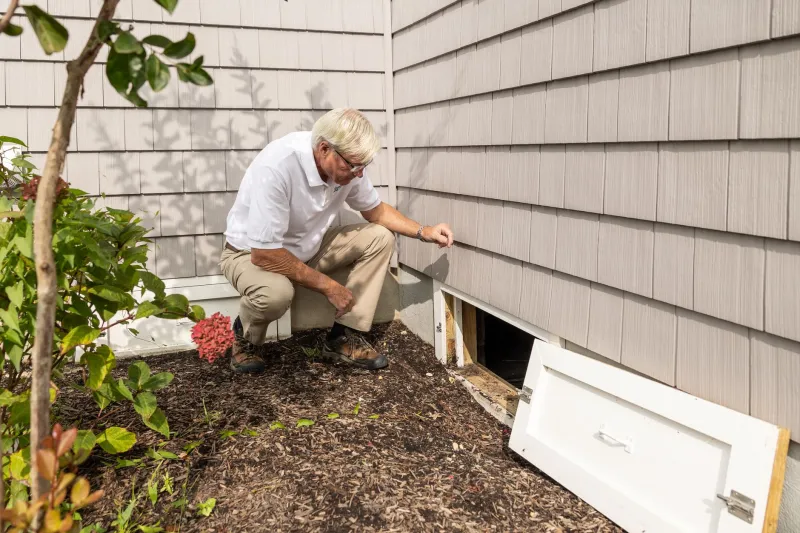
However, this understandable focus on dust systematically diverts attention from radon. Homeowners who invest in HEPA filtration systems, weatherstripping, and dust-rated HVAC filters may feel confident that they have addressed their indoor air quality concerns comprehensively. In reality, none of these measures reduce radon concentrations in any meaningful way. Radon originates from the radioactive decay of uranium in soil and rock — a process entirely unrelated to surface-level dust activity — and it enters homes through foundation cracks, crawl spaces, and soil-to-structure gaps regardless of whether the sky outside is clear or brown with suspended sediment.
The Atmospheric Mechanics That Make Storms Worse for Radon
The relationship between Nevada's desert weather patterns and radon accumulation is more than coincidental. Several meteorological dynamics that accompany dust storms can actively increase radon concentrations inside homes.
First, consider barometric pressure. Dust storms and the weather systems that generate them are frequently associated with low-pressure fronts. When atmospheric pressure drops, the pressure differential between the soil beneath a home and the indoor air increases. This draws soil gases — including radon — upward through foundation openings at an accelerated rate. The same pressure gradient that pulls dust horizontally across the desert floor also pulls radon vertically into living spaces.
Second, homeowner behavior during dust events inadvertently seals radon inside. When storms approach, the instinct is to close windows, shut doors, and minimize ventilation to keep dust out. This is a rational response to particulate matter, but it also eliminates the natural air exchange that otherwise dilutes indoor radon concentrations. A home that is tightly sealed against a dust storm becomes, in effect, a radon accumulation chamber. Without fresh air cycling through, radon that has already entered the structure has nowhere to go.
Third, temperature inversions — a meteorological phenomenon common in Nevada's valleys and basin terrain — trap surface-level air and reduce the dispersion of soil gases. During inversion events, which frequently coincide with the stagnant conditions that follow major dust storms, radon that would otherwise dissipate outdoors instead concentrates near ground level and finds its way into homes more readily.
Distinguishing Dust Symptoms from Radon Risk
This is where many Nevada homeowners make a critical error in reasoning. Because dust storms produce immediate, noticeable symptoms — sneezing, coughing, eye irritation — and because these symptoms resolve when the storm passes and air quality improves, homeowners conclude that their indoor air quality problem has been identified and addressed. Radon, by contrast, produces no acute symptoms whatsoever. Its health consequences, primarily lung cancer, develop over years of cumulative exposure. There is no cough, no odor, no visible residue that signals its presence.
The practical implication is that a homeowner who attributes all indoor air quality concerns to dust may never think to test for radon. They may spend hundreds of dollars on air purification equipment that has no effect on radon levels while the gas continues to accumulate undisturbed. This misattribution is not a sign of carelessness — it is a predictable consequence of how human beings process environmental information. Visible threats command attention. Invisible ones require deliberate, instrumented investigation.
If you have experienced persistent respiratory symptoms that do not resolve fully between dust events, or if your household has never conducted a radon test, the appropriate response is not another air purifier. It is a certified radon test.
Practical Steps for Nevada Homeowners
Distinguishing between dust-related air quality issues and radon exposure requires a straightforward but deliberate approach.
Test first, assume nothing. The only way to know your home's radon level is to measure it. Long-term radon test kits, which measure exposure over 90 days or more, provide the most reliable baseline and account for the seasonal and weather-related fluctuations described above. Short-term tests lasting two to seven days are useful for real estate transactions or rapid assessments but should be followed by long-term testing for a complete picture.
Time your testing strategically. Because radon levels fluctuate with pressure and ventilation changes, conducting a long-term test that spans multiple weather patterns — including dust storm season — provides more meaningful data than a test conducted during a single stable period. The EPA recommends testing with windows and doors closed as much as possible under normal living conditions, which mirrors the behavior homeowners already adopt during dust events.
Do not rely on air purifiers for radon reduction. HEPA filters and ionizing air purifiers are effective at capturing particulate matter, including dust. They do not capture radon gas molecules, which are orders of magnitude smaller than dust particles and behave as a gas rather than a suspended solid. Treating radon with dust-mitigation equipment is the equivalent of trying to filter carbon monoxide with a coffee filter.
Consult a certified mitigation professional if levels are elevated. The EPA action level for radon is 4 picocuries per liter (pCi/L). If your test results meet or exceed this threshold, a sub-slab depressurization system installed by a Nevada-certified radon mitigation contractor is the proven, effective solution. This is not a DIY project for most homes, and the stakes are too high for improvisation.
The Compounding Risk of Nevada's Environment
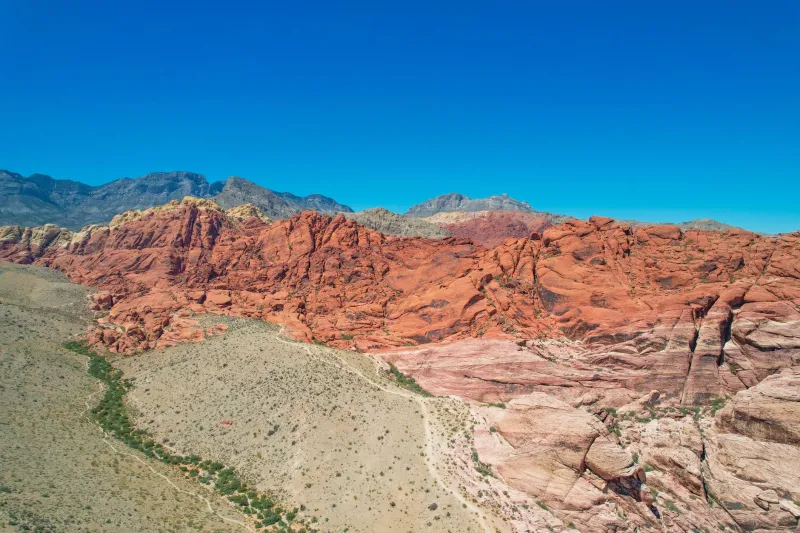
Nevada's geology places it among the states with elevated radon potential. The uranium-bearing granite formations underlying much of the state, combined with the arid climate that keeps soil dry and gas-permeable, create conditions that favor radon migration into structures. Overlay that geological reality with a climate that generates frequent dust storms, temperature inversions, and pressure swings, and the case for vigilant radon monitoring becomes compelling.
Dust storms are a legitimate concern for Nevada homeowners, and managing particulate exposure is a reasonable priority. But the visibility of that threat should not be allowed to crowd out awareness of the one that cannot be seen. The two problems are not mutually exclusive, and addressing one does not address the other. Protecting your household's long-term health requires recognizing both — and testing for the one that will never announce itself on its own.