Desert Doesn't Mean Dry Indoors: How Radon and Mold Team Up Against Nevada Homeowners
Nevada homeowners enjoy one of the driest climates in the continental United States. With average annual humidity levels that would make residents of Florida or the Gulf Coast envious, it is easy to assume that mold — the persistent nemesis of damp basements and leaky roofs — simply has no foothold here. That assumption, unfortunately, is one that indoor air quality specialists encounter and correct on a regular basis. Moisture finds a way into Nevada homes through mechanisms that have little to do with outdoor humidity, and when it does, it often shares space with another invisible threat: radon gas.
The relationship between radon and mold is not a simple cause-and-effect story. Rather, it is a convergence of two distinct hazards that thrive in overlapping environments and, in some cases, are inadvertently worsened by the same home improvement decisions. For Nevada homeowners serious about the air their families breathe, understanding this connection is not optional — it is essential.
Where Moisture Hides in a Desert Home
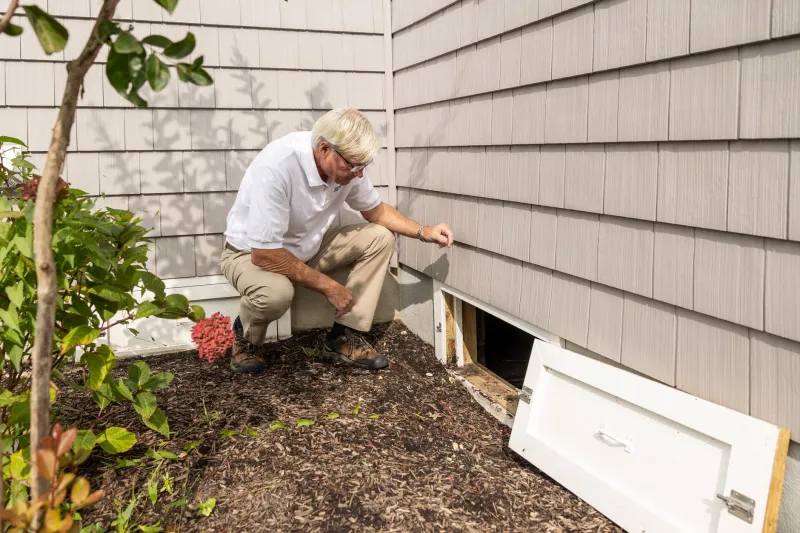
The notion that Nevada homes are inherently dry ignores several well-documented sources of indoor moisture. Crawl spaces beneath older homes in Reno, Las Vegas, and surrounding communities frequently accumulate ground moisture through soil vapor transmission. Even when outdoor air is bone-dry, the earth beneath a home can release water vapor that condenses against cooler structural surfaces.
Bathrooms, kitchens, and laundry rooms generate significant humidity through daily use, and in tightly sealed, energy-efficient homes, that moisture has nowhere to go. Evaporative coolers — still common in parts of Nevada — introduce humidity directly into living spaces as a byproduct of their cooling mechanism. Roof leaks following the region's brief but intense monsoon rains can saturate insulation and wall cavities without ever producing a visible water stain. Swimming pools, hot tubs, and indoor planters contribute as well.
The result is a home that may feel dry to its occupants while quietly harboring pockets of elevated moisture in wall cavities, attic spaces, and beneath floor systems — precisely the environments where mold colonies establish themselves and grow undetected for months or years.
The Radon Entry Points You Already Know About
Radon enters Nevada homes primarily through the same pathways that moisture does: the soil. This radioactive gas, produced naturally by the decay of uranium present in Nevada's geology, seeps upward through foundation cracks, utility penetrations, sump pits, and the porous concrete of basement floors. The EPA estimates that one in fifteen American homes has radon levels at or above the action threshold of 4 picocuries per liter — and Nevada's geological profile places many communities at elevated risk.
Crawl spaces, as noted above, are both a primary radon entry point and a prime location for moisture accumulation. This overlap is not coincidental. The same low-lying, poorly ventilated spaces that allow radon to concentrate are the spaces most likely to experience ground moisture intrusion. A homeowner addressing one problem without the other is working with an incomplete picture.
How Mitigation Systems Can Inadvertently Encourage Mold
This is where the conversation becomes particularly nuanced. Sub-slab depressurization systems — the most common and effective form of radon mitigation — work by drawing air from beneath the foundation and exhausting it outside, reducing the pressure differential that pulls radon into the home. These systems are highly effective at their primary purpose, and for most Nevada homeowners, installing one is a sound investment.
However, professional mitigation contractors and building scientists have observed a secondary effect in certain home configurations. When a depressurization system draws air aggressively from beneath a crawl space or slab, it can also draw in soil moisture vapor, redistributing it into adjacent structural cavities. In homes with inadequate vapor barriers or compromised crawl space encapsulation, this process can elevate localized humidity levels enough to support mold growth — even in Nevada's desert environment.
Additionally, the exhaust pipe routing of a mitigation system matters. If the exhaust terminates near a soffit vent, an attic intake, or a window that is frequently left open, radon-laden air could theoretically re-enter the structure. More relevant to mold, however, is the fact that any penetrations created during installation represent potential pathways for moisture if not properly sealed.
None of this means homeowners should hesitate to install radon mitigation systems — the lung cancer risk posed by elevated radon levels far outweighs the secondary concerns described above. It does mean, however, that installation should be performed by a qualified contractor who accounts for the home's full moisture profile, not radon levels alone.
Recognizing the Signs of Both Problems
Because radon is odorless, colorless, and tasteless, its presence can only be confirmed through testing. Short-term test kits, available at hardware stores and online retailers, provide a reasonable baseline reading, though long-term testing over 90 days offers a more accurate picture of average exposure. Nevada homeowners who have never tested — or who tested more than two years ago — should prioritize doing so.
Mold, by contrast, sometimes announces itself through musty odors, visible discoloration on walls or ceilings, or unexplained respiratory symptoms among household members. However, mold growing inside wall cavities, beneath flooring, or within HVAC ductwork may produce no obvious signs until the colony is well established. Professional mold inspection, particularly in crawl spaces and attics, is warranted when moisture intrusion is suspected.
The symptoms of mold exposure — coughing, congestion, eye irritation, and worsened asthma — can overlap with the long-term respiratory damage associated with radon exposure, making it difficult for homeowners and even physicians to identify a single cause. Households dealing with persistent, unexplained respiratory issues should investigate both hazards simultaneously rather than treating them as mutually exclusive.
A Unified Approach to Indoor Air Quality
The most effective strategy for Nevada homeowners is to treat radon and mold as components of a single indoor air quality assessment rather than separate checklists. Practically speaking, this means several things.
First, any radon mitigation project should include a thorough evaluation of the crawl space or basement for existing moisture issues, vapor barrier integrity, and ventilation adequacy. Addressing radon without correcting moisture problems leaves the home vulnerable to a secondary hazard that the mitigation system itself may amplify.
Second, homeowners investing in crawl space encapsulation or moisture control improvements should simultaneously test for radon if they have not done so recently. Encapsulation can alter the pressure dynamics beneath a home, occasionally affecting radon entry patterns.
Third, HVAC maintenance deserves attention in this context. Dirty or poorly maintained ductwork can harbor mold spores and distribute them throughout a home, compounding the respiratory burden on occupants already experiencing radon exposure. Annual duct inspections and filter replacements are a low-cost safeguard.
Finally, homeowners should work with contractors who are credentialed in both radon mitigation and building science. The Nevada Division of Public and Behavioral Health maintains resources for locating certified radon professionals, and many reputable contractors carry additional certifications in moisture management and indoor air quality.
The Takeaway for Nevada Homeowners
Nevada's desert climate is a genuine asset in many respects, but it does not confer immunity from the indoor air quality threats that affect homeowners across the country. Radon and mold are both present in Nevada homes, both capable of causing serious harm, and both more likely to be overlooked precisely because of the state's dry reputation.
A home that has been tested for radon, mitigated where necessary, and evaluated for moisture vulnerabilities is a home where families can breathe with confidence. In Nevada, that peace of mind is entirely achievable — but it requires looking beyond the sunny, arid exterior to the more complex environment within.