When Energy Savings Become a Health Risk: The Hidden Radon Danger in Nevada's Weatherized Homes
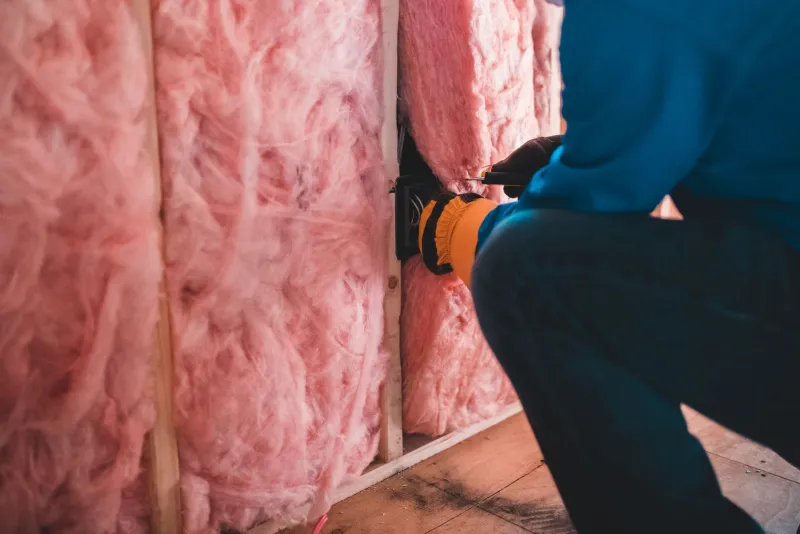
For many Nevada homeowners, the push toward energy efficiency feels like an obvious win. Tighter insulation, sealed crawl spaces, caulked window frames, and reinforced door thresholds all promise lower utility bills — a genuine relief given the state's brutal summer cooling demands. But there is a consequence to this kind of home improvement that rarely appears on any contractor's checklist: the same measures that keep conditioned air inside your home also keep radon gas from escaping.
This is not a hypothetical concern. It is a well-documented phenomenon that public health officials and radon mitigation specialists encounter regularly, and it carries serious implications for Nevada residents who are upgrading their homes without first assessing their radon exposure.
Understanding Why Radon Accumulates in the First Place
Radon is a naturally occurring radioactive gas produced by the decay of uranium in soil and rock. It is colorless, odorless, and tasteless — entirely undetectable without proper testing equipment. In Nevada, the geological composition of the land means that radon-producing minerals are widespread, making the gas a persistent concern across much of the state.
Under normal circumstances, radon that seeps up through soil and into a home's foundation has some capacity to dissipate through natural air exchange — small gaps in walls, around pipes, beneath doors, and through ventilation pathways. This passive dilution is imperfect and often insufficient on its own, but it does limit how much the gas concentrates indoors.
When a home is tightly sealed, that natural exchange is dramatically reduced. The gas that enters through foundation cracks, sump pits, or concrete block walls has far fewer exit routes. Over time, radon concentrations can climb to levels the EPA considers actionable — 4 picocuries per liter (pCi/L) or higher — without any visible sign that anything is wrong.
Nevada's Climate Compounds the Problem
The urgency of this issue is amplified by Nevada's specific climate conditions. Homeowners here are not sealing their homes modestly. The extreme heat of Las Vegas summers, the cold winters of Reno and Carson City, and the high energy costs associated with both push residents toward aggressive weatherization. Double-pane windows, spray foam insulation, vapor barriers, and HVAC upgrades are increasingly common — and increasingly thorough.
At the same time, Nevada's geology creates elevated radon risk in numerous counties. The Nevada Division of Public and Behavioral Health has identified significant portions of the state as Zone 1 or Zone 2 radon areas, meaning average indoor radon levels have the potential to exceed federal action thresholds. When a high-risk geological environment meets a tightly sealed living space, the conditions for dangerous radon accumulation are effectively optimized.
There is also a behavioral dimension specific to Nevada's climate. Because residents spend a great deal of time indoors — retreating from extreme heat in summer and cold in winter — exposure duration increases. Even moderate radon concentrations become more concerning when a person spends the majority of their waking and sleeping hours breathing indoor air.
The Weatherization-First Mistake
The most common error Nevada homeowners make is completing energy efficiency upgrades without first testing for radon. The logic seems sound: seal the home, reduce energy costs, then address any other issues later. But radon does not wait for a convenient time to become a problem.
If your home already has elevated radon levels before weatherization, sealing it further will almost certainly worsen the situation. What was a manageable concentration can become a serious health hazard within a relatively short period after improvements are completed. And because nothing about the home looks or smells different, many families continue living in increasingly contaminated air without any awareness of the change.
Contractors performing insulation or air sealing work are not typically required to advise homeowners about radon. Energy auditors, similarly, are focused on thermal performance rather than indoor air quality. The responsibility falls on the homeowner to ask the right questions — and to test before work begins.
Testing Before You Seal: A Non-Negotiable Step
If you are planning any weatherization project — whether it involves attic insulation, crawl space encapsulation, window replacement, or HVAC system upgrades — radon testing should be completed first. This means placing a short-term or long-term test kit in the lowest livable area of the home and obtaining a baseline reading before conditions change.
Short-term tests, which run for 48 hours to 7 days, can provide a quick preliminary picture. Long-term tests, conducted over 90 days or more, give a more accurate representation of average exposure. For homeowners on the verge of a major renovation, a short-term test is often the practical choice — it delivers results quickly enough to inform decisions before contractors arrive.
If results come back below 2 pCi/L, the risk is relatively low, though retesting after weatherization is still advisable. If results fall between 2 and 4 pCi/L, mitigation should be seriously considered before or alongside any sealing work. If results exceed 4 pCi/L, the EPA recommends mitigation regardless of any other home improvement plans.
Balancing Energy Efficiency with Radon Safety
The good news is that energy efficiency and radon safety are not mutually exclusive goals. They simply require coordinated planning rather than sequential afterthought.
The most effective approach for homeowners who want both outcomes is to install a sub-slab depressurization system — the standard radon mitigation method — before or during weatherization work. This system uses a pipe and fan to draw radon from beneath the foundation and vent it outside, preventing it from entering the living space in the first place. When this mitigation infrastructure is in place, sealing the home tightly actually enhances the system's effectiveness by ensuring that the pressure differential it creates is maintained.
In other words, a properly mitigated home benefits from tight construction. The problem arises only when sealing occurs without mitigation. Homeowners who sequence these steps correctly — test, mitigate if necessary, then weatherize — can achieve genuine energy savings without compromising indoor air quality.
Additional strategies worth discussing with a qualified radon professional include the installation of heat recovery ventilators (HRVs) or energy recovery ventilators (ERVs). These mechanical ventilation systems introduce fresh outdoor air into a tightly sealed home while recovering most of the thermal energy from the outgoing air. They preserve the efficiency gains of weatherization while ensuring adequate air exchange — a meaningful benefit in a state where outdoor air quality is generally good outside of wildfire season.
What to Do If You Have Already Weatherized
If your home has already undergone significant energy efficiency improvements and you have not tested for radon since, the appropriate response is straightforward: test now. Do not assume that because your home felt safe before, it remains safe after sealing. The change in air exchange dynamics may have occurred gradually, and the only way to know your current exposure level is to measure it.
Place a test kit in the basement or lowest occupied floor of your home and follow the instructions carefully. If results indicate elevated radon, contact a Nevada-certified radon mitigation contractor to assess your options. Mitigation after weatherization is entirely possible and typically effective — it simply means addressing a problem that could have been prevented with earlier planning.
Protecting Your Investment and Your Health
Energy efficiency upgrades represent a significant financial investment for most Nevada homeowners. Protecting that investment means ensuring the home you have made more comfortable is also genuinely safe to live in. Radon testing and, where necessary, mitigation are not obstacles to energy savings — they are prerequisites for making those savings meaningful.
A home that costs less to heat and cool but exposes its occupants to elevated radon levels is not a healthier home. With proper sequencing and the guidance of qualified professionals, Nevada homeowners can achieve both goals without compromise.